Guide · Start here if you just bought it
Terrible Lizards guide for new players
The movement system, the difference between a chase and a hunt, the settings that actually matter, and the ten habits that stop a dinosaur from eating you in the first two hours.
Verified October 31, 2026Game v1.0.9No spoilers beyond Level 1 · applies to v1.0.9
What kind of game this is
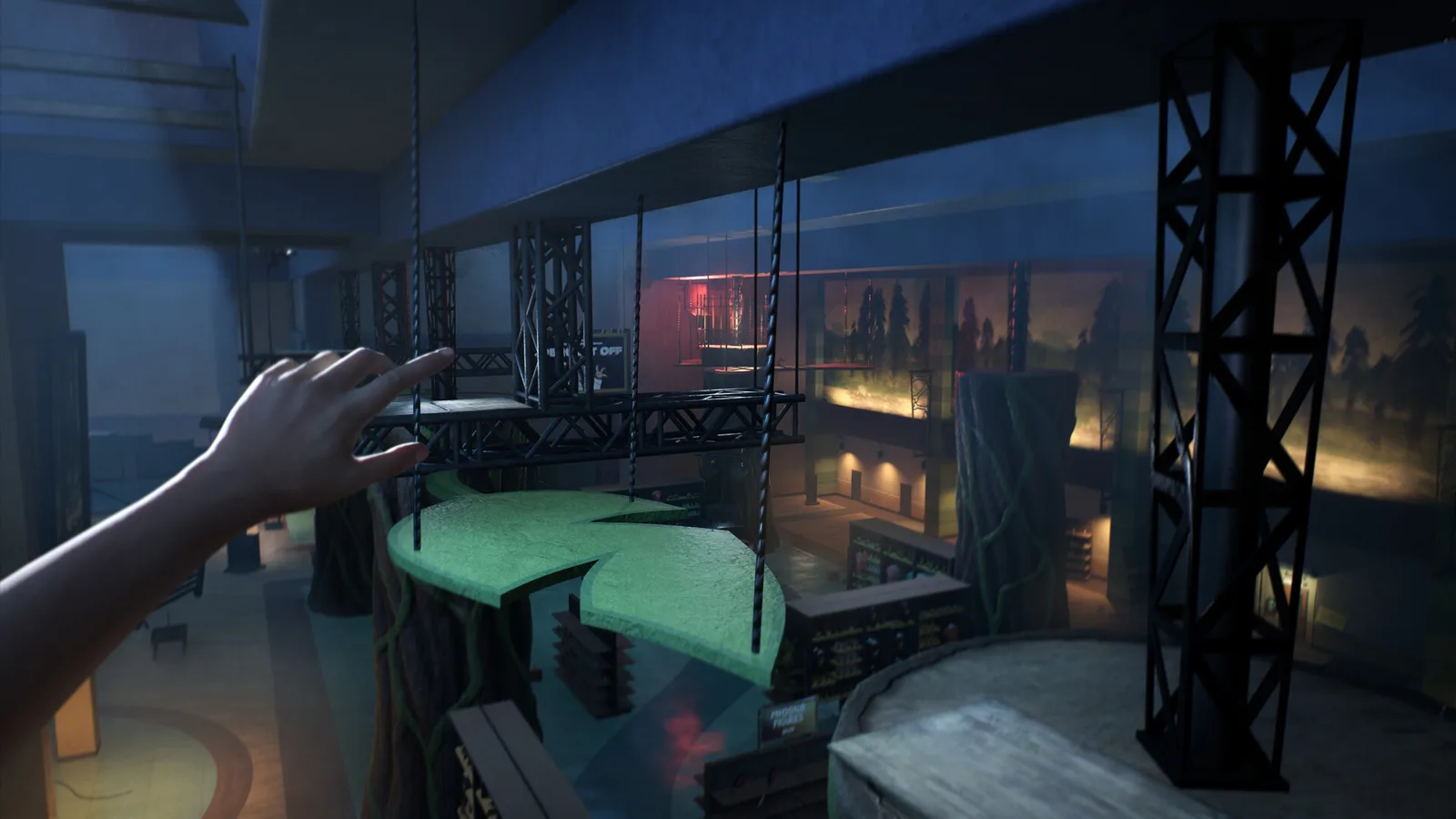
Terrible Lizards is a parkour platformer with horror dressing. That order matters. The fear comes from being unable to fight back, but the skill being tested is movement — the same skill a precision platformer tests, just with something breathing behind you.
The developer describes the loop as: enter a new space, explore, learn a mechanic, get pushed into harder platforming, then face a skill check before the pace drops again. Once you notice that rhythm, the game becomes much easier to read. A room that introduces a new move is a promise that you will need it at speed shortly.
The one-sentence version
The movement set
Everything in the game is built from eight moves. None of them are complicated on their own; the difficulty is stringing them together without stopping.
| Move | How it actually works |
|---|---|
| Run | Your default. There is a sprint, but it is a commitment, not a mode. |
| Jump | Chain it into the next move. A standing jump is a last resort. |
| Climb | Grab ledges and mantle up. Holding forward on landing is what makes it stick. |
| Wall run | Cross gaps by running along a wall. Commit early; hesitating kills the run. |
| Slide | Go under obstacles without losing speed. Also the easiest way to avoid a swipe. |
| Bounce | Part of keeping a chain alive. More useful on goo and padded surfaces than it sounds. |
| Swing | Named by the developers among the moves you string together in harder stretches. |
| Balance | Introduced in the Level 2 caverns. Walk narrow beams; do not sprint them. |
The exact bindings change between patches, so check Options → Controls in your own build rather than trusting a list online. Full controller support is confirmed on PC, and the 1.0.9 patch fixed controllers getting locked out of sprinting.
Momentum, explained
This is the single concept that separates players who find the game easy from players who find it impossible. Terrible Lizards does not have a stamina bar and it does not slow you down for turning. What it does is reward carrying speed from one move into the next.
Never land standing still
When you land, you should already be holding a direction. The next jump inherits your speed, and a standing start throws it away.Jump late, not early
Most failed jumps in this game are early jumps. The ledge geometry is forgiving at the far edge and unforgiving at the near one.Hold forward through a climb
Climbs trigger from momentum. If you release the stick the moment you touch the wall, you slide off.Treat wall runs as commitments
You cannot bail halfway along a wall. Decide before you step onto it, then hold the line.Slide to keep, not to stop
Slides are for maintaining speed under an obstacle. Using one to brake is how you end up inside a dinosaur.
Chases vs hunts
The game has two kinds of monster encounter and they want opposite behaviour. Confusing them is the most common reason people stall in Level 2 and Level 3.
Chase
A corridor with a deadline
- Linear and scripted. The route ahead is the route.
- Sprint almost the whole time.
- Do not look back — the camera turn costs speed.
- Dying is cheap; checkpoints are close.
Hunt
An open room with a tenant
- Open and patrol-based. You choose when to move.
- Walk the corners, sprint the straights.
- Break line of sight before every interaction.
- One objective per trip, then reset.
Your first hour
If you want the shortest path to being competent, do these in order.
- Turn the hints off, then back on. Look at what changes. Knowing which parts of the environment are guidance makes it much easier to read new rooms later.
- Learn the lobby climb. The Allosaurus fossil is a climbing frame. If you can get onto it cleanly, you can climb most things in Level 1.
- Practise the theater crate jump. It is the first jump that punishes a standing start. Do it three times until the timing feels automatic.
- Get the flashlight. The Dilo Dash token route is optional-feeling and mandatory in practice; the basement is dark.
- Die once on purpose. Jump off something high. You get an achievement and, more usefully, you learn that death costs seconds rather than a run.
Settings worth changing
- Hints (Accessibility). On by default. Turning it off removes yellow guidance, swaps some environment pieces and quietens Jordan. The developer added it for players who found the game hand-holdy, then warned it was not the intended experience.
- Graphics preset. Low, medium, high, epic and a Steam Deck preset. If you are crashing on a 4 GB card, drop the preset before you do anything else.
- “Terrible” lighting. A cheap lighting mode introduced for low-VRAM crashes. It also makes the game darker and, honestly, scarier.
- VSync. On by default since the demo. Leave it on unless you have a reason not to.
- Controller vs keyboard. Both work. The wall-run sections are more forgiving with a stick than with digital keys.
Ten rules that keep you alive
- Update to 1.0.9 or later before your first run.
- Read every note you pass — several are literally the puzzle answer.
- Press every Paleo Pal talk box; it is an achievement and a free lore dump.
- Take the flashlight the moment it is offered.
- In hunts, do one objective per trip.
- Break line of sight before stopping, always.
- Check side ledges for amber; every fourth one unlocks a NG+ modifier.
- Walk beams, sprint corridors.
- If a room introduces a move, expect a chase that needs it.
- Do not look back. You already know it is there.
The five ways people die
Almost every death in the first three hours is one of these. Recognising them is faster than improving.
- Stopping on a landing. You think it is safe because it is a floor. It is a floor in a chase.
- Jumping early. The gap looks bigger than it is, so you leave too soon and land short.
- Turning the camera. Half a second of look-back is a missed jump.
- Standing still to press a button. Interact prompts do not pause the world. Line of sight first.
- Sprinting in a hunt. Covered above, still the most common one.